
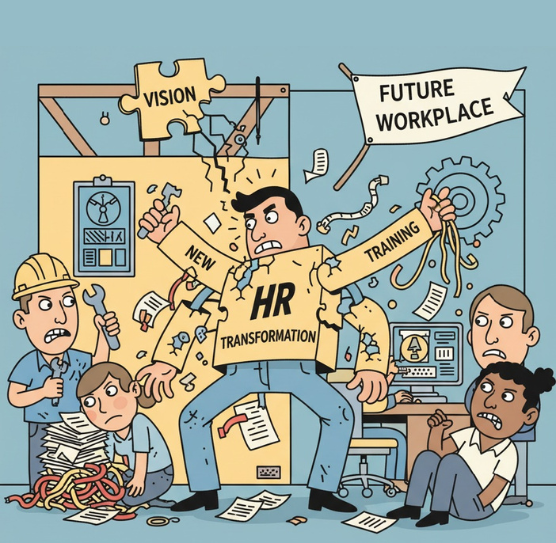
In today’s dynamic business landscape, organizations recognize the critical role of Human Resources (HR) in driving growth, agility, and resilience. Many companies embark on HR transformation journeys—restructuring processes, adopting digital tools, and redefining people strategies—expecting to create lasting impact. Yet, despite good intentions and significant investments, most HR transformations fail to deliver meaningful results.
So why does this happen? The reasons are less about technology or strategy and more about execution and alignment. Below are the most common factors that derail HR transformation efforts.
1. Lack of Clear Purpose and Vision
Many organizations rush into HR transformation without first defining the why. Implementing new systems or restructuring HR functions without a clear vision often results in fragmented initiatives. Employees see changes as administrative rather than strategic, leading to poor adoption. Successful transformations start by answering key questions: What are we solving for? How does this connect to business goals? How will this improve the employee experience?
2. Overemphasis on Technology
While digital tools are essential, many companies treat technology as the solution rather than an enabler. An HR software implementation alone cannot transform culture, leadership, or employee engagement. Without redesigning processes, aligning policies, and addressing people’s needs, new platforms simply digitize inefficiency. True transformation balances technology with mindset shifts and capability building.
3. Resistance to Change
HR transformations often stumble because organizations underestimate the cultural and behavioral resistance that accompanies change. Employees, managers, and even HR professionals may cling to old ways of working. Without strong change management, clear communication, and visible leadership support, transformations become a source of frustration instead of progress.
4. Weak Leadership Sponsorship
HR initiatives frequently fail when leaders delegate transformation to HR teams without actively championing the cause. Employees take cues from leaders, and when they don’t see commitment from the top, they assume the initiative isn’t a priority. Sustainable transformation requires leaders to model new behaviors, make people decisions transparently, and align rewards with desired outcomes.
5. One-Size-Fits-All Approach
Every organization has unique needs shaped by its culture, size, and industry. Copy-pasting frameworks from other companies or relying solely on external consultants often creates misalignment. Transformations succeed when they are tailored—building on organizational strengths, addressing specific challenges, and evolving iteratively instead of enforcing rigid, pre-packaged models.
6. Failure to Measure and Adapt
Without clear metrics, organizations cannot gauge whether HR transformation is delivering value. Many initiatives lose momentum because success is not defined beyond project completion. Effective programs establish measurable outcomes—such as retention, engagement, leadership pipeline strength, or time-to-hire—and regularly adapt strategies based on feedback and business needs.
7. Ignoring the Employee Experience
At the heart of HR transformation lies the workforce itself. Yet, many organizations prioritize cost reduction, compliance, or efficiency over employee experience. If employees feel unheard, overburdened, or disengaged, the transformation fails its most important stakeholders. Building solutions around employee needs ensures trust, adoption, and long-term impact.
How to Make HR Transformation Work
While many fail, HR transformations can succeed with the right approach:
- Define a clear purpose aligned to business strategy.
- Balance technology with culture change and capability building.
- Invest in change management with transparent communication.
- Secure visible leadership sponsorship at every level.
- Design tailored solutions instead of copying trends.
- Set measurable outcomes and adapt continuously.
- Prioritize employee experience as the foundation of every initiative.
Final Thought
HR transformation is not a project—it’s a journey. Success requires more than systems and processes; it demands leadership commitment, employee trust, and a culture of adaptability. Organizations that approach transformation holistically are the ones that turn HR into a true strategic partner and unlock sustainable business advantage.