We’ve all been there, right? That shiny new initiative, the big transformation project, launched with great fanfare… only to fizzle out, leaving behind a trail of cynicism and unfinished objectives. Statistically, it’s a common story – roughly two-thirds of these grand plans stumble before they truly take hold. And it’s rarely about a bad strategy or a flawed technical fix. It’s almost always about the execution, about how real people, with real emotions and habits, navigate the shifts
As someone who lives and breathes change management, I can tell you that drawing the new organizational chart is the easy part. The real magic – and the lasting impact – happens when you truly master the “people side” of transformation.
Here are five critical, often-overlooked insights from my own experience that make the difference between another failed attempt and a change that truly sticks.
1. Stop Talking Data, Start Speaking to the Heart
Most leaders are brilliant at building a logical case for change. They’ve got the ROI, the market analysis, the efficiency gains all mapped out. And that’s essential! But here’s the kicker: change doesn’t happen on a spreadsheet. It happens in the hearts and minds of your team.
- The Game-Changer: Instead of just asking, “Why is this good for the company?”, you must answer the unspoken question everyone is asking: “What does this mean for me?”
- My Advice: Ditch the generic, one-size-fits-all memo. Your communication needs to be like a well-aimed dart, not a scattergun. Clearly spell out the personal positives (“What’s actually in it for me?”) and, crucially, acknowledge the personal barriers (“What might make this tough for me?”) for different groups of employees. Paint a vivid picture of their new reality – the skills they’ll gain, how their day will genuinely improve, and perhaps most importantly, what vital things are staying the same. That’s where you build real momentum, not just compliance.
2. Tap into the “Water Cooler” Network – It’s More Powerful Than You Think
We have formal structures: the org chart, the processes, the KPIs. They align the work. But there’s a hidden, yet incredibly powerful, force at play: the informal organization. This is the network of conversations, the unspoken rules, the peer-to-peer interactions where true pride and commitment are built (or broken).
- The Game-Changer: Too often, change is something done to employees, not with or by them. When that happens, the informal culture often becomes a breeding ground for doubt, where “naysayers” can easily spread old assumptions and negative whispers.
- My Advice: Actively seek out your “pride builders”. These are the frontline folks who, in the eyes of their colleagues, embody the best behaviors and genuinely make a positive impact. Empower them. Give them a voice. Let them drive improvements. When your team hears genuine enthusiasm and success stories from their peers – not just another executive directive – it taps into a powerful emotional current that can accelerate change like nothing else. Ignore this network, and you risk it actively undermining your efforts.
3. Leaders: Get “In Front” and Get Your Hands Dirty
Sure, senior executives are the bedrock of any major initiative. But simply sponsoring a project from the top isn’t enough anymore.
- The Game-Changer: Leaders must be visibly “in front” of the change, actively modeling the new behaviors they’re asking everyone else to adopt. If you preach a “performance culture,” your leadership team must embody it, from how they collaborate to how they hold each other accountable.
- My Advice: Look inwards first. I’ve seen leaders use candid, one-on-one sessions and workshops to align on new core behaviors. But here’s the secret sauce: they openly shared their journey and commitments with their wider teams. This transparency isn’t just a nice-to-have; it rebuilds trust, closes the “credibility gap,” and transforms leaders into genuine champions who inspire, rather than just instruct.
4. Bring HR to the Table as a Strategic Co-Pilot, Not an Admin Task
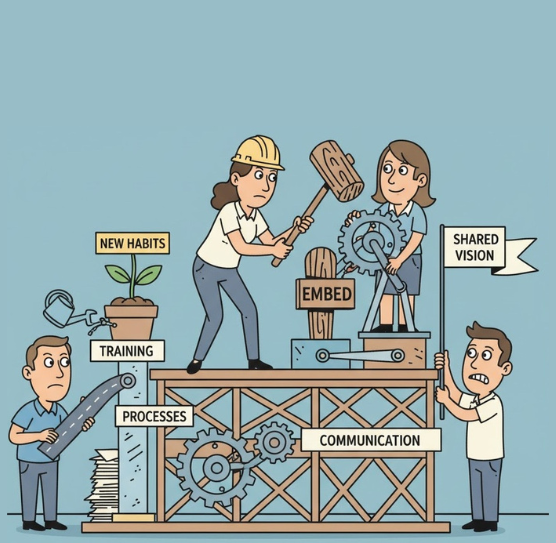
This is a big one that’s often missed. HR alignment is so frequently an afterthought, or a crucial partner is simply undervalued. The truth is, lasting change depends on embedding new behaviors deep into your organization’s very DNA.
- The Game-Changer: If you preach new behaviors but your incentive systems, performance reviews, and hiring processes still reward the old ways, guess what? People will revert to what gets them promoted and paid. It’s human nature.
- My Advice: HR needs to be a strategic powerhouse and a driver of change. They’re not just there for paperwork. They need to actively align recruitment, performance management, learning & development, and retention programs to support the new reality. Think about it: a financial services firm I worked with completely overhauled their recruitment to specifically test for qualities needed in their new contact center environment. The result? Dramatically better hires and a far faster ramp-up. That’s strategic HR at its best.
5. Never, Ever Declare Victory Too Soon
It’s tempting. The project is “done,” the new system is “live.” Time to pop the champagne, right? Wrong. Declaring victory prematurely is one of the quickest ways to derail sustained change. Change isn’t a finish line; it’s an ongoing journey.
- The Game-Changer: The ability to manage change needs to become part of your organizational muscle memory, a core leadership trait, and deeply woven into your culture. You have to consciously acknowledge, celebrate, and institutionalize the new, improved ways of working.
- My Advice: Ensure your change initiatives don’t just track project milestones, but also measure the actual change outcomes. Is the new behavior actually happening? Are people embracing it? The ultimate success isn’t just launching something; it’s when people lead the change, adopt the change, and sustain the change, translating into tangible business benefits. This relentless focus on sustainment is what stops everyone from quietly slipping back into “the old way of doing things within a matter of months.”
Making change stick isn’t about perfectly executing a plan on paper. It’s about deeply understanding people, motivating them authentically, empowering the right voices, aligning your systems, and having the endurance to see it through. Get these “human elements” right, and your next transformation won’t just launch; it will soar.
What’s the one hidden factor you’ve found makes or breaks a change initiative in your organization?